What Games Teach About Evolution
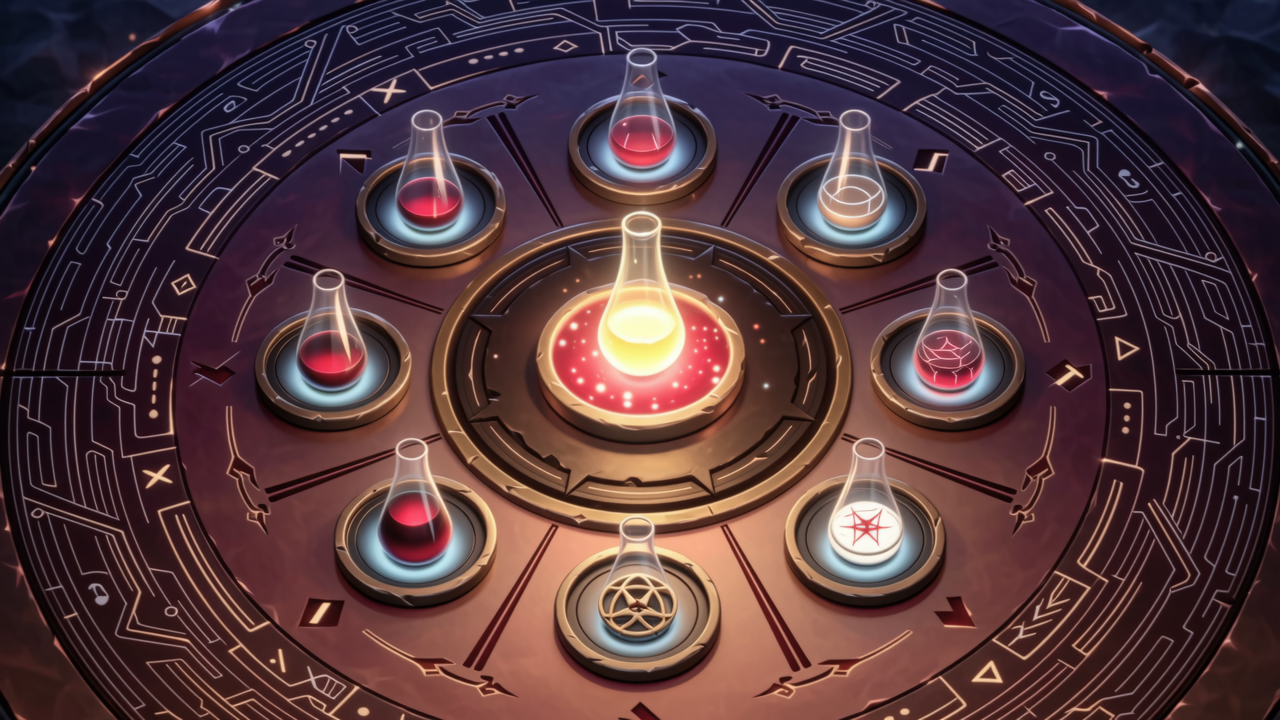
Playing this game felt like watching life unfold in fast motion—simple at first, then increasingly complex, until survival wasn’t the goal anymore, but management of success. At the beginning, I died constantly, clueless about how anything worked. A monster would appear, I’d panic, click randomly, and suddenly my screen was full of blood I didn’t know how to use. But slowly, patterns emerged. I learned to kill a basic monster, harvest its blood, merge it with others, and eventually merge the monsters themselves. Each small discovery felt like unlocking a piece of a hidden language. The game didn’t explain anything—it just let me fail, observe, and adapt.
What made it fun wasn’t just progress, but balance. Every choice mattered. Whether I prioritized poison, spells, or merging, no single path dominated completely. There were surprises too—random spawns, strange relics, unexpected interactions between elements—that kept things unpredictable. Yet beneath the chaos, structure existed. When I noticed the seven dots on the screen, I realized monsters weren’t appearing by chance. That moment shifted everything. It wasn’t randomness I was fighting—it was a system I could learn.
Then came the relic. A golden bar appeared, unassuming at first, but it changed the game entirely. Suddenly, survival became easy. Monsters that once overwhelmed me now fell quickly. I felt powerful, yes—but also strangely empty. The tension that had driven me forward was gone. I wasn’t struggling anymore; I was optimizing. And that’s when it hit me: this is exactly what happened to us as a species. Early humans fought for survival—predators, hunger, cold. Then we discovered tools, agriculture, fire. We conquered our threats, not by enduring them, but by outsmarting them.
But winning brought new problems. Just like in the game, where my board filled up until there was no space left to grow, humanity now faces limits of its own making. We’ve taken so much space, consumed so many resources, that expansion isn’t freedom anymore—it’s a trap. Our relics—technology, medicine, industry—have made life easier, but they haven’t solved meaning. If anything, they’ve revealed deeper questions: What do we do now that we don’t have to struggle? How do we live well when the challenge is no longer survival, but sustainability?
The game didn’t end with victory. It ended with clutter. Too many merged items, too little room, an overabundance of success. And yet, I kept playing, rearranging, trying to squeeze out a few more points. Maybe that’s the most human thing of all—not knowing when to stop, even when we’ve already won.