Waiting in the Hospital Quiet
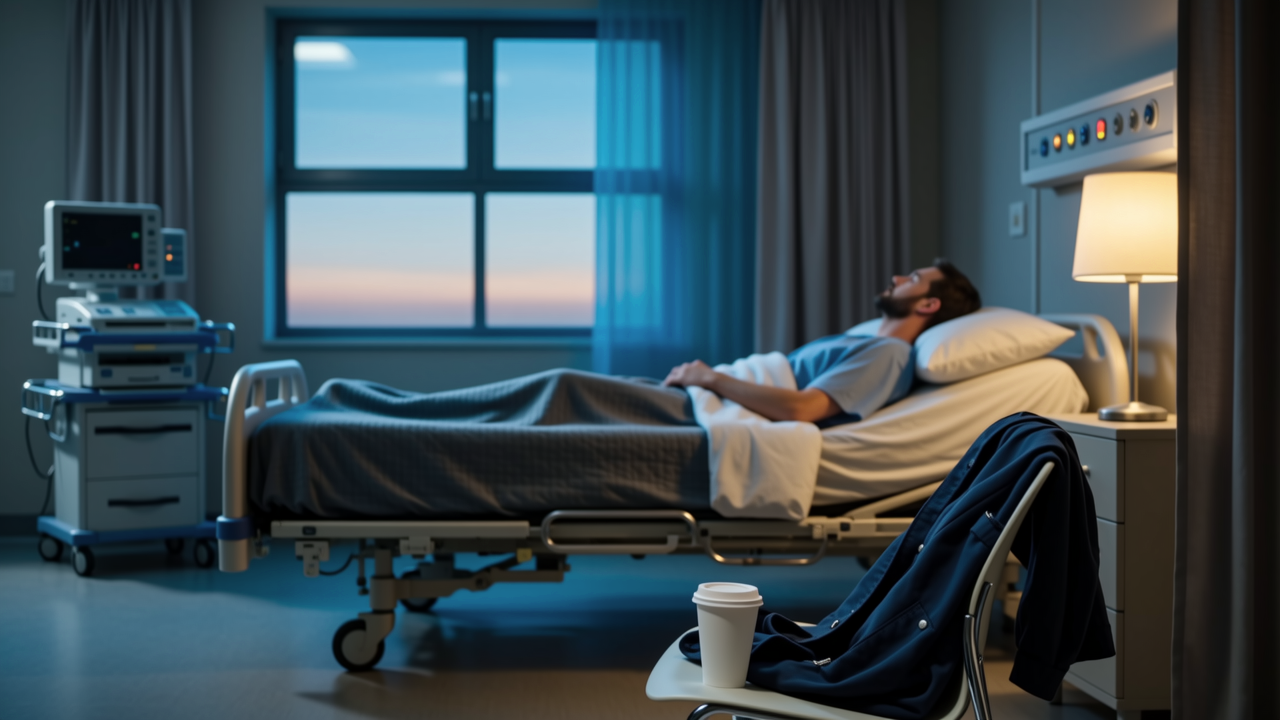
The hospital room hums with a steady, mechanical rhythm that does little to quiet my own thoughts. Chris lies still in the bed, his breathing slow and even. The doctors say he’s resting, probably just sleeping off the exhaustion, but the word “probably” hangs in the air like a thin veil. Hours ago, he was caught in a violent spiral after eating something poisonous, his body purging everything until there was nothing left. Now, the sudden stillness feels almost heavier than the chaos that brought him here. I sit nearby, watching the rise and fall of his chest, trying to match my own breathing to his.
I’ve always known his stomach was fragile. It’s a quiet truth I’ve carried for a while, even if he refused to acknowledge it. Chris never liked to admit weakness. He would brush off discomfort, push through meals that disagreed with him, and laugh away the warnings with a stubborn kind of pride. There was a certain bravery in that, or maybe just a deep-seated need to appear unbreakable. But bodies don’t negotiate with pride. They keep their own accounts, and eventually, they call in the debt. Seeing him like this, stripped of that defensive armor, feels strangely intimate.
The hours before the ambulance arrived were a blur of urgency and helplessness. When someone you care about is suffering in such a raw, physical way, you realize how little control you actually have. You can offer water, you can make calls, you can stay close, but you cannot take the pain from them. All you can do is witness it. That helplessness settles into your bones. It transforms worry into a quiet, heavy presence that follows you from the bathroom floor to the sterile hospital corridor. You learn to sit with it, because there is nowhere else to put it down.
I keep telling myself he’s just sleeping. It’s easier to frame unconsciousness as rest, to imagine his body finally getting the break it has been denying itself for years. The mind does that when fear knocks at the door—it rearranges the furniture, softens the edges, and offers rationalizations like warm blankets. “Probably sleeping,” I repeat, half to myself, half to the quiet room. It’s not denial, exactly. It’s a way of staying grounded while the medical staff do their work and the monitors trace steady green lines across the dark.
This whole ordeal has stripped away the usual noise of everyday life and left only what matters. I think about how often we mask our vulnerabilities, how we treat our own limits as inconveniences rather than signals. Chris’s stubbornness wasn’t unique; it’s a human reflex. We all want to believe we can outlast our own fragility. But watching him now, I realize that admitting weakness isn’t a failure. It’s an act of trust. It’s how we let people in, how we allow ourselves to be cared for when the body finally says enough.
I hope he wakes up soon. I hope he recovers fully, and I hope he finally gives himself permission to listen to what his body has been trying to tell him. Until then, I’ll stay in this chair, keeping watch in the humming quiet. There’s nothing left to do but wait, and in that waiting, there’s a strange kind of peace. The storm has passed. The room is still. And for now, that has to be enough.