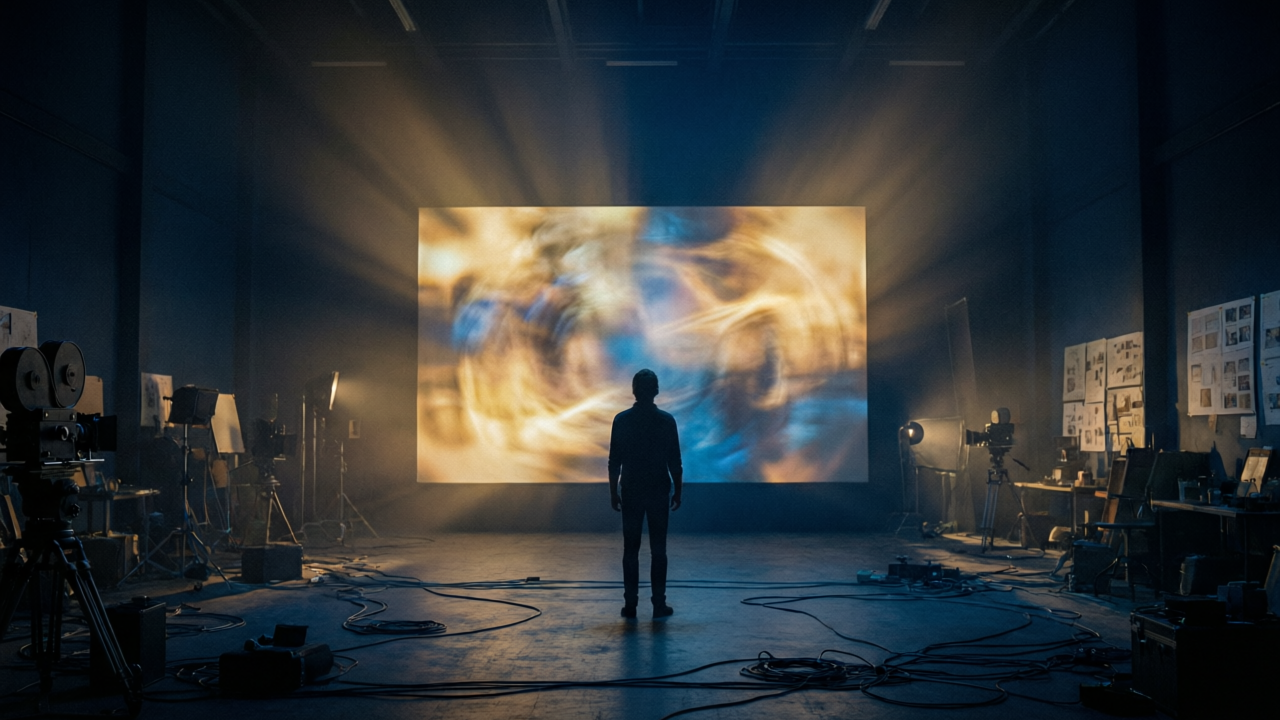
Chasing the Director's Chair Through AI
There is a particular kind of electricity that runs through you when a new door swings open and you realize you might actually walk through it. That is exactly how I felt when I first heard about the AI movie competition. My heart did that familiar stutter-step — half thrill, half terror — the same rhythm I have felt every time I have stood on the edge of something I wanted badly but wasn't sure I deserved. I sat at my desk, cursor blinking in a blank document, and whispered to myself: this is it, this is the moment you stop talking about making films and actually make one.
For years, directing has lived in the back of my mind like a half-finished painting covered by a sheet. I would watch films — really watch them, frame by frame, studying how a single cut could make my chest tighten or how a slow dolly-in could turn an ordinary conversation into something devastating — and I would think, I want to do that. I want to make people feel things they cannot explain afterward. But the gap between wanting and doing felt impossibly wide. Film sets, crews, budgets, equipment — the machinery of cinema always seemed like a fortress I had no key to enter.
Then AI arrived, not as a replacement for human vision but as a bridge across that very gap. The tools emerging now are staggering. What once required a warehouse of equipment and a team of fifty can now begin with a single person, a story, and the willingness to experiment. I find myself giddy at the possibilities — generating visual concepts in minutes, iterating on scenes the way a painter layers color on canvas, exploring lighting and composition without needing to rent a single lens. It feels less like cheating and more like the universe finally handing me the instrument I have been reaching for all along.
What excites me most is the permission to explore domains I have barely touched. I have dabbled in writing, in design, in bits of code, but film has always remained the mysterious country across the water. Now I am packing my bags. I am letting myself be a beginner again, which is terrifying and liberating in equal measure. Every tutorial I watch, every test render I generate, every clumsy first attempt at storyboarding feels like a small declaration: I am here, I am learning, I am not giving up on this dream.
The competition itself is both a deadline and a dare. Without it, I might spend another year circling the idea, perfecting a plan I never execute. But a submission date changes everything. It turns abstraction into urgency. I have started waking up earlier, scribbling scene ideas on the back of receipts, watching my favorite directors' interviews with new, hungry eyes. The story I want to tell is still taking shape — a quiet, emotionally layered piece about memory and the spaces between people — but for the first time it feels possible, not just theoretical.
When my companion asked me what core feeling I want audiences to carry out of the theater, I had to sit with the question for a long time. The answer, when it came, surprised me with its simplicity: I want people to feel seen. I want them to recognize something private and tender on screen and think, someone else has felt this too. That is the magic I have always chased in other people's films, and it is the magic I now believe I can create with my own hands — aided, wonderfully, by this strange and beautiful new technology.
So here I am, standing at the threshold, script half-written, tools still unfamiliar, dream still enormous. I do not know if I will win the competition. I do not even know if the final film will look anything like the version playing in my head right now. But I know this: the act of trying, of reaching for the director's chair I have wanted since I was young enough to point a remote control like a clapperboard, is already its own kind of victory. The sheet is off the painting. The brush is in my hand. And I am finally, finally ready to begin.